

Neurofeedback and Mood Regulation
Understanding Mood Challenges and Emotional Regulation
Persistent low mood, emotional exhaustion, stress sensitivity, and reduced motivation can significantly impact daily functioning and overall well-being. These experiences are often associated with measurable changes in brain activity, emotional regulation, sleep patterns, and nervous system balance.
Mood-related challenges may occur alongside stress-related conditions, attention difficulties, burnout, anxiety-related symptoms, or other forms of cognitive and emotional dysregulation. Individual experiences can vary considerably, and multiple neurological, psychological, physiological, and environmental factors may contribute.
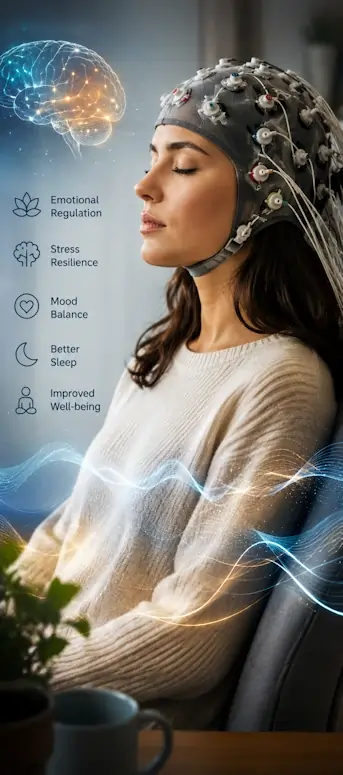
QEEG-guided neurofeedback is a non-invasive form of brain training that uses real-time EEG feedback to support self-regulation and nervous system stability. By monitoring brainwave activity and providing immediate feedback, neurofeedback is designed to support improvements in emotional regulation, cognitive flexibility, stress resilience, and overall brain function.
Some research suggests that neurofeedback may support improvements in mood regulation, sleep quality, concentration, stress tolerance, and emotional well-being in certain individuals. Training protocols are typically individualized based on EEG or QEEG findings and may target specific brainwave patterns associated with regulation, connectivity, and stability.
If you or someone you know is experiencing persistent low mood, emotional exhaustion, stress-related challenges, or anxiety-related symptoms, seeking guidance from qualified professionals may be beneficial. Appropriate support, lifestyle adjustments, and individualized approaches can play an important role in improving emotional well-being and overall quality of life.
Traditional Methods of Treating Depression
Overview
Depression is a mental health disorder that affects millions of people worldwide. While there are many ways to treat depression, traditional methods such as therapy and medication remain the most popular. Patients with depression often experience insomnia and may also have other disorders.
Therapy
Therapy is one of the most common ways to treat mental illness, including depression and anxiety disorders. Different types of therapy such as cognitive-behavioral therapy (CBT), dialectical behavior therapy (DBT), and psychodynamic therapy can be used to alleviate stress. Additionally, neurofeedback treatment and biofeedback can be effective forms of neurofeedback training.
CBT is a type of talk therapy that focuses on changing negative thoughts and behaviors. DBT is similar to CBT but also includes mindfulness techniques. Psychodynamic therapy focuses on identifying unconscious patterns that may be contributing to depression. Neurofeedback training, which involve monitoring brainwaves, are emerging as effective therapies for mental illness.
Therapy can help individuals learn coping skills, improve communication, and gain insight into their emotions. Clinical changes in behavior can be a result of therapy, making it an effective treatment for depression. Studies have shown that therapy can also provide training for individuals to better manage disorders and enhance their overall performance.

Medication
Antidepressant medication is another common way to treat depression. These medications work by altering the activity of neurotransmitters in the brain, which can help regulate mood. However, for those who prefer non-medication options, neurofeedback treatment can be an effective alternative. This treatment involves training the brainwaves to improve self-regulation and reduce symptoms of various disorders, including ADHD.
There are several different types of antidepressants available, including selective serotonin reuptake inhibitors (SSRIs), serotonin-norepinephrine reuptake inhibitors (SNRIs), tricyclic antidepressants (TCAs), and monoamine oxidase inhibitors (MAOIs). However, for those who prefer non-pharmacological interventions, neurofeedback treatment can be an alternative option. Additionally, sleep disorders such as insomnia and sleep apnea can also contribute to depression and may require separate treatment. It is also important to note that some individuals with depression may have comorbid conditions such as ADHD, which can impact treatment options
It’s important to note that medication should always be prescribed by a healthcare professional and taken as directed. Some individuals with disorders such as ADHD may require additional training or sleep support, and may experience side effects from antidepressant medication or find that it doesn’t work for them.

Meditation
Meditation has gained popularity as a way to treat depression and improve sleep in recent years. This practice involves focusing your attention on the present moment while letting go of distracting thoughts, which has been shown to positively impact brain waves. Studies have also suggested that regular meditation training can lead to long-term improvements in mental health.
Research studies have shown that meditation can reduce symptoms of depression and anxiety by promoting relaxation and reducing stress through the regulation of brain waves, as observed in EEG tests. Although not a direct treatment for ADHD, some studies suggest that meditation may help improve attention and focus in individuals with ADHD.

Understanding Neurofeedback and Mood Regulation
What is Neurofeedback?
Neurofeedback is a technique that has been gaining popularity in recent years as a way to treat various conditions and improve cognitive function. It involves monitoring brain activity using EEG sensors placed on the scalp, and then providing feedback to the patient in real-time about their brainwaves. This training can help patients learn to regulate their brain activity, which can lead to improvements in their performance.
Neurofeedback is a type of biofeedback that uses real-time displays of brain activity to teach self-regulation of brain function. This technique can be used to help individuals with depression by training them to modify the activity of the specific brain regions associated with the condition. For example, patients might learn to increase activity in the prefrontal cortex or decrease hyperactivity in the amygdala, which may help to regulate mood and alleviate depressive symptoms. This process is generally facilitated through the use of electroencephalography (EEG), where sensors placed on the scalp measure electrical activity in the brain.
The goal of neurofeedback therapy for depression is to change patterns of brain activity that are thought to underlie the symptoms of the disorder. Some types of depression have been associated with an imbalance between the brain’s right and left frontal areas. Neurofeedback can target these areas and train the brain to correct this imbalance, potentially reducing depressive symptoms. Moreover, neurofeedback may enhance the brain’s flexibility and resilience, helping individuals better manage stress and recover from negative events. This form of treatment is non-invasive and typically does not have the side effects associated with medication, making it an appealing option for some individuals.
Neurofeedback and Mood Regulation
Persistent low mood, emotional exhaustion, and stress-related dysregulation are often associated with measurable changes in brain activity and nervous system regulation. Neurofeedback involves monitoring brainwave activity (EEG) and providing real-time feedback designed to support self-regulation and brain training. Through this process, individuals may learn to improve emotional regulation, cognitive flexibility, and overall nervous system stability.
Neurofeedback is a non-invasive approach that has been explored in relation to mood regulation and emotional well-being. Some research suggests it may support improvements in mood, stress regulation, and brain function in certain individuals. Training protocols are typically individualized based on EEG or QEEG findings and may target specific brainwave patterns associated with regulation and stability.

Research on Neurofeedback and Mood Regulation
Research has explored neurofeedback as a potential approach for supporting mood regulation, emotional resilience, and nervous system self-regulation. Research suggests that neurofeedback training may be associated with improvements in emotional well-being, stress tolerance, sleep quality, attention, and overall quality of life in certain individuals.
Neurofeedback training is designed to support self-regulation by providing real-time EEG-based feedback about brain activity patterns. Training protocols are typically individualized and may target specific brainwave patterns, connectivity networks, or regulation processes identified through EEG or QEEG assessment.
Some research has compared neurofeedback with other supportive approaches used for mood-related challenges and emotional dysregulation. While findings vary between studies, results suggest that certain individuals may experience improvements in emotional regulation, cognitive flexibility, stress management, and overall functioning following neurofeedback training.
Neurofeedback is generally considered a non-invasive approach, and ongoing research continues to investigate its potential role in supporting mood regulation and brain function. As with many forms of brain-based training and brain-based interventions, individual responses may vary depending on multiple neurological, psychological, physiological, and environmental factors.

Understanding the Role of Different Brain Regions and brainwaves
The Role of Different Brain Regions in Depression
Depression is a complex mental health disorder that affects millions of people globally. It involves various brain regions, including the prefrontal cortex, amygdala, hippocampus, and basal ganglia. Each of these regions plays a unique role in our emotional and cognitive functioning. For instance, the prefrontal cortex is involved in emotion regulation and decision-making, while the amygdala is crucial for processing emotions like fear and anxiety. The hippocampus aids in forming and recalling memories, and the basal ganglia control movement and motivation.
When depression strikes, these brain regions may not function optimally, leading to symptoms such as persistent sadness, feelings of hopelessness, and a sense of worthlessness. Neurofeedback emerges as a promising therapeutic approach that can assist individuals with depression by training their brains to operate more efficiently.
During a neurofeedback session, electrodes placed on the scalp measure brain activity. This data is then relayed back to the individual through visual or auditory signals, enabling them to learn how to regulate their brain activity. Research indicates that neurofeedback can effectively alleviate depression symptoms, enhancing mood, sleep, and cognitive function.
Neurofeedback works by helping to rebalance activity in the brain regions implicated in depression, leading to improved overall functioning and wellbeing.
Prefrontal Cortex: This region is responsible for decision-making, planning, and regulating emotions. Reduced activity in this area has been linked to depression. Brain waves such as theta and beta can be trained to increase activity in this region.
Amygdala: This part of the brain is associated with emotional responses. In people with depression, the amygdala may be hyperactive and result in heightened responses to negative emotional stimuli.
Hippocampus: This region is crucial for memory and learning. Chronic stress and depression have been associated with this area.
Prefrontal Cortex: This area is involved in decision-making, problem-solving, and social behavior. Changes in the prefrontal cortex may contribute to the cognitive symptoms of depression, such as difficulty concentrating and making decisions.
Anterior Cingulate Cortex (ACC): This region is involved in mood regulation and emotional processing. Abnormalities in the ACC have been linked to depression.
Basal Ganglia: These structures are involved in reward processing and motivation, both of which can be impaired in depression.
Thalamus: It acts as a relay station for sensory information. Changes in the function of the thalamus have been observed in people with depression.
How neurofeedback targets these areas
Neurofeedback and Brain Regulation
Neurofeedback, also known as EEG biofeedback, is a non-invasive form of brain training that uses real-time EEG feedback to support self-regulation and nervous system stability. By monitoring brain activity patterns and providing immediate feedback, neurofeedback is designed to help individuals develop more adaptive patterns of brain function associated with emotional regulation, cognitive flexibility, attention, and stress resilience.
Training protocols are typically individualized and may target specific brain regions, connectivity patterns, or dysregulated brainwave activity identified through EEG or QEEG assessment. The goal is not simply to increase or decrease isolated frequencies, but to support more efficient and balanced brain function based on the individual’s unique neurophysiological patterns.
Targeting Brainwave and Connectivity Patterns
Neurofeedback may involve training specific frequency ranges, regulation networks, or connectivity processes associated with attention, emotional processing, arousal regulation, and cognitive performance. Depending on the assessment findings, training may focus on improving stability, flexibility, synchronization, or regulation within targeted brain networks.
Modern neurofeedback approaches often utilize individualized EEG or QEEG-based protocols designed to support overall brain regulation rather than applying the same training approach to every individual.
Studying the Effect of Neurofeedback on Heart Rate and Attention
The effect of neurofeedback on heart rate and attention has been extensively studied through magnetic resonance imaging. Studies have shown that neurofeedback can help regulate heart rate variability, reducing stress levels and improving overall well-being. It has been found that neurofeedback can improve attention span by increasing blood flow to the prefrontal cortex. Furthermore, neurofeedback has been found to affect brain activity, at specific frequency levels.
Studies Suggest Improvements in Mood Regulation with Neurofeedback
Research has explored the potential role of neurofeedback in supporting mood regulation, emotional resilience, attention, and cognitive functioning. Some studies suggest that neurofeedback training may be associated with improvements in emotional well-being, stress tolerance, concentration, and overall quality of life in certain individuals experiencing mood-related challenges.
Certain research findings have reported improvements in emotional regulation, executive functioning, attention, and stress management following neurofeedback training. Because neurofeedback protocols are typically individualized, outcomes may vary depending on the specific training approach, assessment findings, and the individual’s unique neurophysiological patterns.
Researchers continue to investigate how EEG and QEEG-guided neurofeedback may support self-regulation and brain function. While findings vary across studies, neurofeedback remains an area of ongoing interest within brain-based training and neuroregulation research.

Conclusions
Mood-related challenges can significantly influence emotional well-being, stress resilience, cognitive functioning, sleep quality, and overall quality of life. Neurofeedback is a non-invasive form of brain training that uses real-time EEG feedback to support self-regulation and nervous system stability.
Research continues to investigate the potential role of EEG and QEEG-guided neurofeedback in supporting mood regulation, emotional resilience, attention, and cognitive flexibility. Because neurofeedback protocols are typically individualized, training approaches may vary depending on the individual’s unique neurophysiological patterns and assessment findings.
For individuals interested in brain-based approaches to self-regulation and emotional well-being, neurofeedback may represent a supportive and individualized neuroregulation approach. Consulting qualified professionals can help determine whether EEG or QEEG-guided neurofeedback may be appropriate based on the individual’s goals, symptoms, and assessment findings.
