

Sleep and Cognitive Performance
Understanding the Relationship Between Sleep and Brain Function
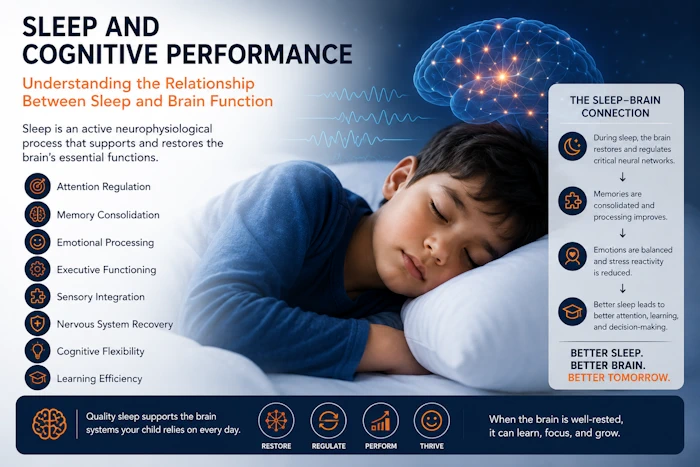
Sleep and cognitive performance are closely connected through attention regulation, memory processing, emotional stability, and nervous system function. Sleep plays a central role in cognitive performance, emotional regulation, attention stability, memory processing, and overall nervous system function. During sleep, the brain continuously performs important restorative and regulatory processes that support learning, concentration, decision-making, and adaptive functioning.
Modern neuroscience research increasingly demonstrates that sleep quality may influence multiple aspects of brain performance in both children and adolescents. Even mild sleep disruption may affect attention regulation, emotional stability, mental processing efficiency, and academic functioning.
Sleep is not simply a passive state of rest. It is an active neurophysiological process involving complex communication between brain regions responsible for:
- Attention regulation
- Memory consolidation
- Emotional processing
- Executive functioning
- Sensory integration
- Nervous system recovery
- Cognitive flexibility
- Learning efficiency
Because sleep influences multiple brain systems simultaneously, changes in sleep quality may sometimes affect both cognitive and emotional functioning.
How Sleep Supports Cognitive Performance
During healthy sleep cycles, the brain processes and organizes information gathered throughout the day. Sleep supports the stabilization of neural networks involved in learning, concentration, memory, and adaptive regulation.
The brain may use sleep to:
- Consolidate newly learned information
- Strengthen important neural connections
- Filter unnecessary information
- Support emotional recovery
- Regulate stress-related activity
- Restore attentional stability
- Improve cognitive efficiency
- Support nervous system balance
Sleep also plays an important role in maintaining communication between multiple functional brain networks.
When sleep becomes inconsistent or insufficient, cognitive performance may become less efficient, especially in areas involving sustained attention, mental endurance, working memory, and emotional self-regulation.
Sleep and Attention Regulation
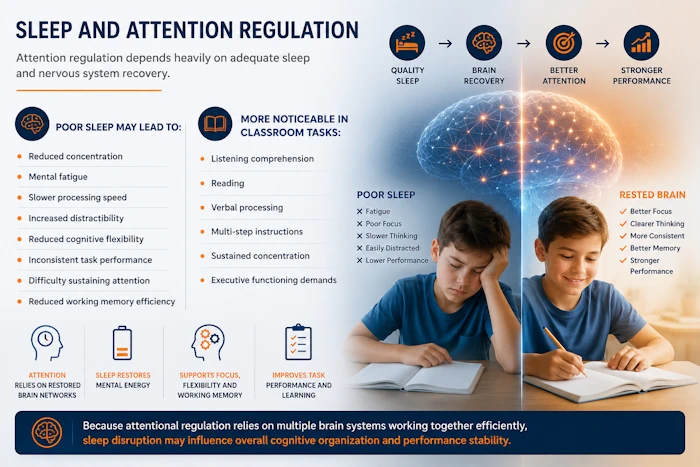
Attention regulation depends heavily on adequate sleep quality and nervous system recovery.
Children and adolescents experiencing poor sleep may sometimes show:
- Reduced concentration
- Mental fatigue
- Slower processing speed
- Increased distractibility
- Reduced cognitive flexibility
- Inconsistent task performance
- Difficulty sustaining attention
- Reduced working memory efficiency
In classroom environments, sleep-related cognitive fatigue may become more noticeable during tasks involving:
- Listening comprehension
- Reading
- Verbal processing
- Multi-step instructions
- Sustained concentration
- Executive functioning demands
Because attentional regulation relies on multiple brain systems working together efficiently, sleep disruption may influence overall cognitive organization and performance stability. Reduced sleep quality may also influence broader patterns involving learning efficiency and academic performance.
Sleep and Memory Processing
Memory formation involves several stages of information processing that continue during sleep.
Research suggests that sleep may support:
- Short-term memory stabilization
- Long-term memory consolidation
- Learning retention
- Recall efficiency
- Integration of newly learned information
- Academic learning processes
Sleep is especially important after periods of intensive learning or cognitive activity.
When the brain does not receive adequate restorative sleep, information processing efficiency may become less stable. Some individuals may experience reduced mental clarity, slower recall, or increased cognitive fatigue.
Adequate sleep may support more efficient communication between brain regions involved in learning and memory organization.
Emotional Regulation and Sleep
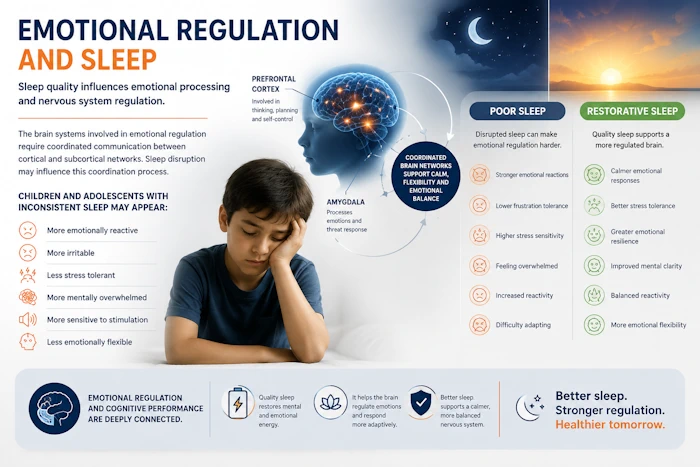
Sleep quality may also influence emotional processing and nervous system regulation.
The brain systems involved in emotional regulation require coordinated communication between cortical and subcortical networks. Sleep disruption may influence this coordination process.
Children and adolescents experiencing inconsistent sleep patterns may sometimes appear:
- More emotionally reactive
- More irritable
- Less stress tolerant
- More mentally overwhelmed
- More sensitive to stimulation
- Less emotionally flexible
Emotional regulation and cognitive performance are closely interconnected. Mental fatigue may reduce the brain’s ability to efficiently regulate emotional responses during challenging situations.
Because of this relationship, sleep quality is often considered an important component of overall nervous system regulation. Sleep-related dysregulation may overlap with broader patterns involving emotional regulation and stress processing.
Sleep, Stress Regulation, and Nervous System Stability
Sleep plays an important role in maintaining balance within the nervous system.
Chronic stress, hyperarousal, irregular schedules, excessive screen exposure, and inconsistent routines may sometimes interfere with healthy sleep patterns.
When sleep becomes chronically disrupted, the nervous system may remain in a more activated or dysregulated state.
This may influence:
- Attention stability
- Cognitive endurance
- Stress resilience
- Emotional regulation
- Processing efficiency
- Adaptive flexibility
Restorative sleep supports recovery processes that may help the nervous system maintain more stable regulation patterns.
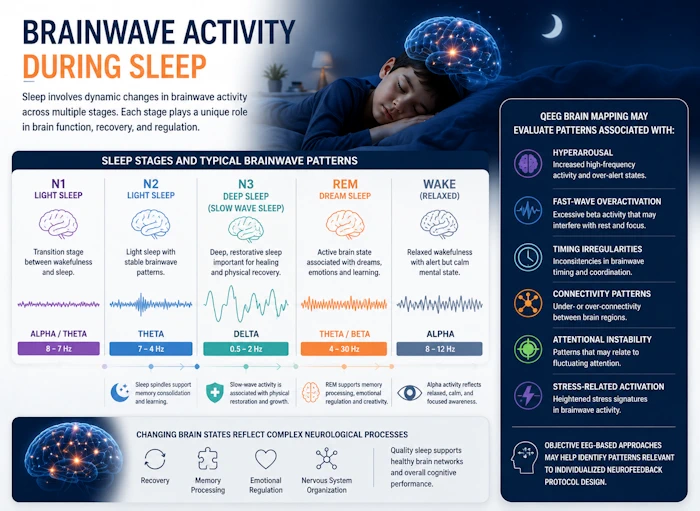
Brainwave Activity During Sleep
Sleep involves dynamic changes in brainwave activity across multiple stages.
Different stages of sleep are associated with different EEG frequency patterns, including:
- Delta activity
- Theta activity
- Sleep spindles
- Slow-wave activity
- REM-associated activation patterns
These changing brain states reflect complex neurological processes involved in recovery, memory processing, emotional regulation, and nervous system organization.
QEEG brain mapping may sometimes be used to evaluate functional brain activity patterns associated with:
- Hyperarousal
- Fast-wave overactivation
- Timing irregularities
- Connectivity patterns
- Attentional instability
- Stress-related activation
Objective EEG-based approaches may help identify patterns relevant to individualized neurofeedback protocol design.
Sleep and Academic Performance
Adequate sleep is strongly associated with learning efficiency and academic functioning.
Children and adolescents who experience chronic mental fatigue may sometimes struggle with:
- Sustained concentration
- Reading comprehension
- Processing speed
- Classroom attention
- Organization
- Learning endurance
- Verbal processing
- Task completion
Because academic performance depends on multiple integrated brain systems, sleep quality may influence overall learning efficiency.
Sleep is increasingly recognized as an important factor in cognitive development and educational functioning.
Technology, Screens, and Sleep Quality
Modern digital environments may influence sleep regulation patterns.
Late-night screen exposure, excessive stimulation, irregular schedules, and high levels of cognitive activation may sometimes interfere with healthy sleep routines.
Potential contributing factors may include:
- Bright light exposure before sleep
- Cognitive overstimulation
- Irregular sleep timing
- Reduced nervous system recovery
- Mental hyperactivation
- Increased stress-related activation
Consistent sleep routines and reduced stimulation before bedtime may support healthier nervous system regulation.
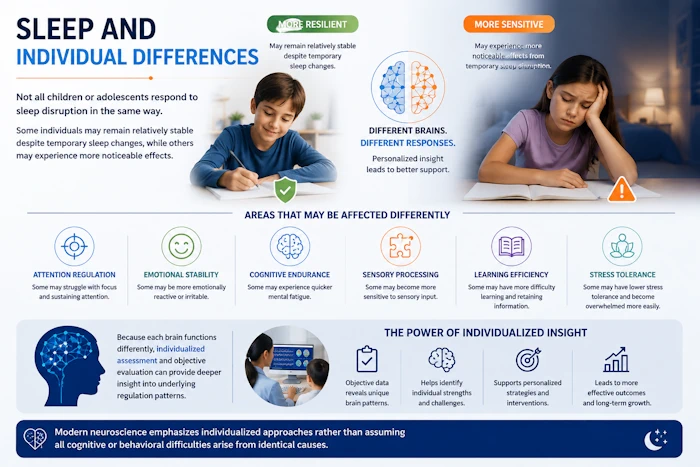
Sleep and Individual Differences
- Attention regulation
- Emotional stability
- Cognitive endurance
- Sensory processing
- Learning efficiency
- Stress tolerance
QEEG Brain Mapping and Sleep-Related Regulation Patterns
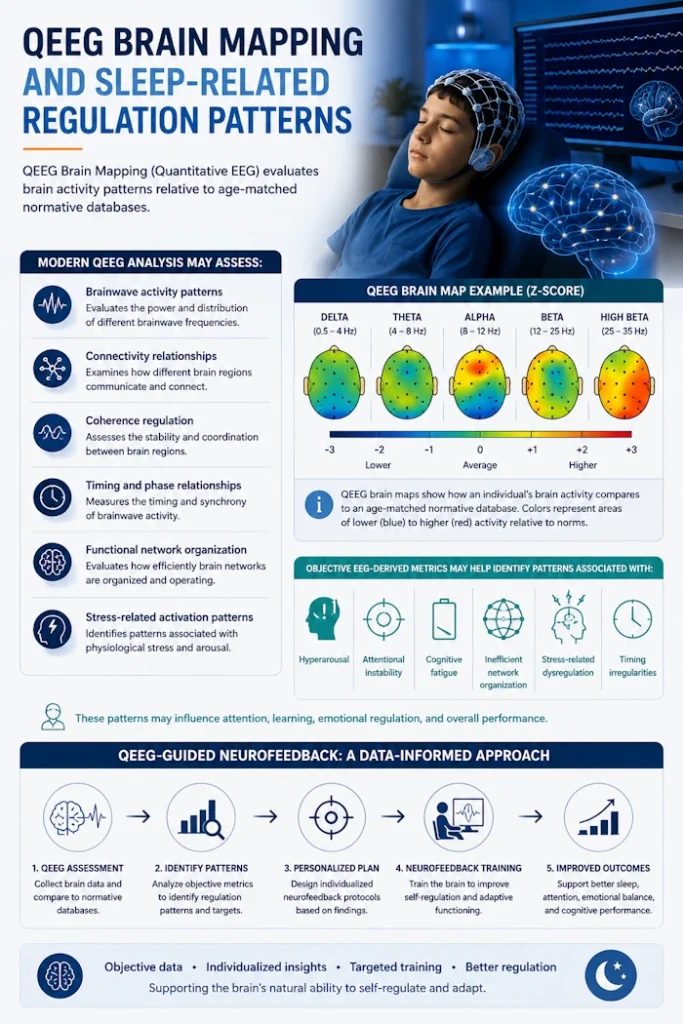
QEEG Brain Mapping (Quantitative EEG) evaluates brain activity patterns relative to age-matched normative databases.
Modern QEEG analysis may assess:
- Brainwave activity patterns
- Connectivity relationships
- Coherence regulation
- Timing and phase relationships
- Functional network organization
- Stress-related activation patterns
Objective EEG-derived metrics may sometimes help identify patterns associated with:
- Hyperarousal
- Attentional instability
- Cognitive fatigue
- Inefficient network organization
- Stress-related dysregulation
- Timing irregularities
QEEG-guided neurofeedback approaches may utilize these objective findings to support individualized training protocols focused on self-regulation and adaptive nervous system functioning. Learn more about QEEG Brain Mapping and brain network analysis.
A Supportive and Non-Invasive Approach
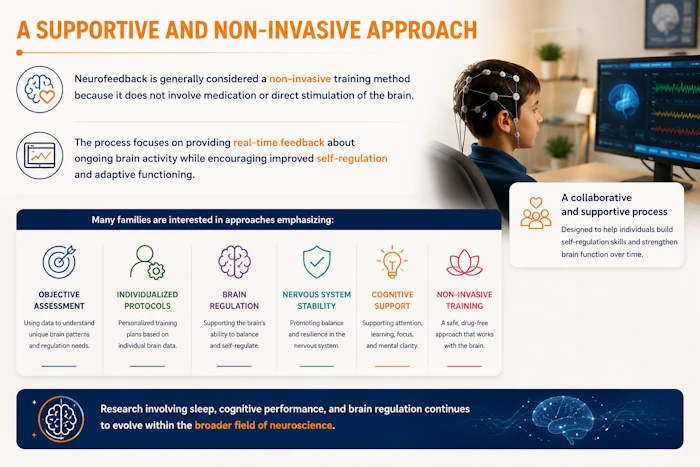
- Objective assessment
- Individualized protocols
- Brain regulation
- Nervous system stability
- Cognitive support
- Non-invasive training approaches
Frequently Asked Questions
How does sleep affect cognitive performance?
Sleep plays an important role in attention regulation, memory processing, emotional stability, learning efficiency, and overall nervous system function. During sleep, the brain performs restorative processes that support cognitive organization and adaptive functioning.
Can poor sleep affect attention and concentration?
Inconsistent or insufficient sleep may sometimes contribute to reduced concentration, mental fatigue, slower processing speed, and difficulty sustaining attention during cognitively demanding tasks.
Why is sleep important for learning?
Sleep supports memory consolidation and information processing. Healthy sleep may help the brain organize newly learned information and support learning efficiency in classroom and academic environments.
Can sleep influence emotional regulation?
Sleep quality may influence emotional processing and nervous system regulation. Poor sleep may sometimes be associated with increased emotional reactivity, stress sensitivity, or reduced emotional flexibility.
What is the relationship between sleep and brain regulation?
Sleep supports communication between multiple functional brain networks involved in attention, emotional regulation, memory, sensory processing, and cognitive performance.
What is QEEG Brain Mapping?
QEEG Brain Mapping (Quantitative EEG) is an advanced EEG analysis method that evaluates brain activity patterns relative to age-matched normative databases using objective EEG-derived metrics.
Can QEEG evaluate patterns associated with sleep-related dysregulation?
Modern QEEG analysis may sometimes identify functional patterns associated with hyperarousal, attentional instability, timing irregularities, stress-related activation, and inefficient network organization.
What is neurofeedback?
Neurofeedback is generally considered a non-invasive brain training approach that provides real-time feedback about ongoing brain activity while supporting improved self-regulation and adaptive nervous system functioning.
Conclusion
Sleep plays a fundamental role in cognitive performance, emotional regulation, attention stability, learning efficiency, and overall nervous system functioning.
Healthy sleep supports communication between multiple brain systems involved in memory processing, executive functioning, emotional flexibility, and adaptive regulation.
When sleep becomes inconsistent or disrupted, some children and adolescents may experience changes involving concentration, stress regulation, mental endurance, cognitive processing efficiency, or emotional stability.
Modern neuroscience increasingly recognizes the importance of individualized approaches that consider brain regulation, nervous system organization, and functional network activity.
QEEG Brain Mapping and neurofeedback-based approaches represent one area of ongoing investigation within the broader field of brain-based training and neuroregulation.
Further research continues to explore the relationship between sleep, cognitive performance, nervous system regulation, and adaptive brain functioning across development.