

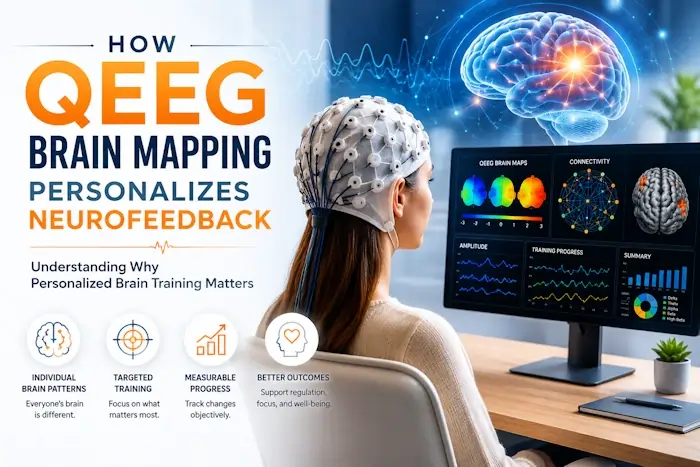
How QEEG Brain Mapping Personalizes Neurofeedback
Understanding Why Personalized Brain Training Matters
Neurofeedback is not a one-size-fits-all intervention. Two individuals may experience similar symptoms—such as attention difficulties, emotional dysregulation, poor sleep, anxiety, or cognitive fatigue—while having very different underlying patterns of brain activity.
QEEG brain mapping helps identify these patterns objectively. Instead of relying only on symptom descriptions, QEEG provides measurable information about how the brain is functioning across multiple neural networks. This data can then be used to guide more individualized neurofeedback protocols.
At Chiang Mai Neurofeedback Center, QEEG-guided neurofeedback is used to help personalize training based on each person’s unique brain activity patterns rather than generalized training templates.
What Is QEEG Brain Mapping?
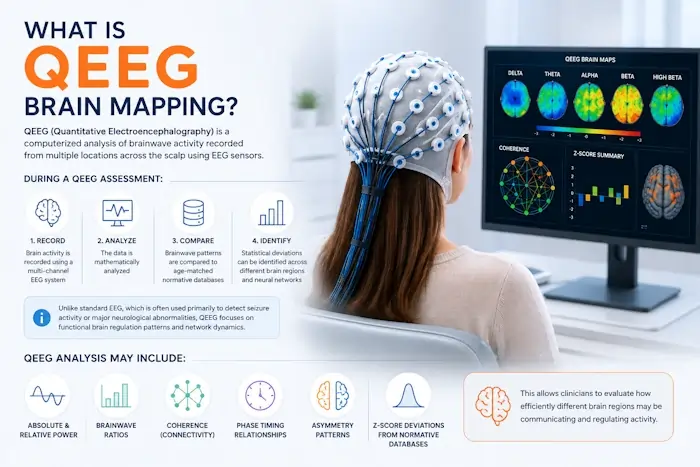
QEEG stands for Quantitative Electroencephalography. It is a computerized analysis of brainwave activity recorded from multiple locations across the scalp using EEG sensors.
During a QEEG assessment:
- Brain activity is recorded using a multi-channel EEG system
- The data is mathematically analyzed
- Brainwave patterns are compared to age-matched normative databases
- Statistical deviations can be identified across different brain regions and neural networks
Unlike standard EEG, which is often used primarily to detect seizure activity or major neurological abnormalities, QEEG focuses on functional brain regulation patterns and network dynamics. QEEG data may be analyzed using advanced normative databases such as NeuroGuide by Applied Neuroscience.
QEEG analysis may include:
- Absolute and relative power
- Brainwave ratios
- Coherence (connectivity between regions)
- Phase timing relationships
- Asymmetry patterns
- Z-score deviations from normative databases
This allows clinicians to evaluate how efficiently different brain regions may be communicating and regulating activity.
Why Symptoms Alone Are Often Incomplete
Many symptoms can overlap across different conditions.
For example, difficulties involving:
- attention
- concentration
- emotional regulation
- memory
- cognitive fatigue
- sleep
may occur in a wide range of situations, including stress, burnout, anxiety, trauma exposure, sleep dysregulation, learning difficulties, or attention-related disorders.
Because of this overlap, symptom descriptions alone do not always explain the underlying neurophysiological pattern.
QEEG brain mapping adds an additional layer of objective information that may help guide neurofeedback training more precisely.
How QEEG Personalizes Neurofeedback
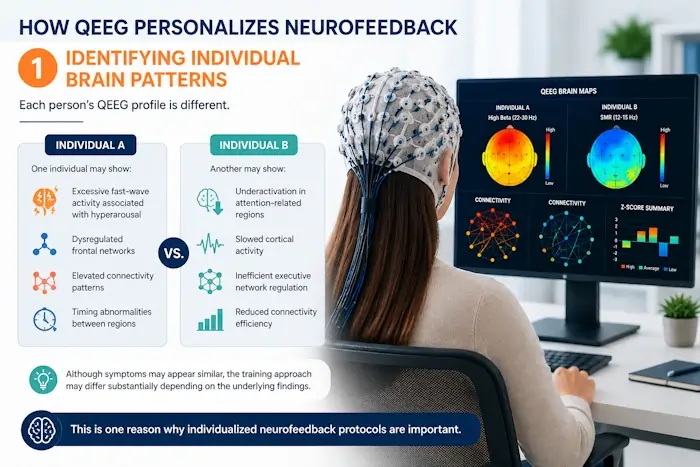
1. Identifying Individual Brain Patterns
Each person’s QEEG profile is different.
One individual may show:
- excessive fast-wave activity associated with hyperarousal
- dysregulated frontal networks
- elevated connectivity patterns
- timing abnormalities between regions
Another may show:
- underactivation in attention-related regions
- slowed cortical activity
- inefficient executive network regulation
- reduced connectivity efficiency
Although symptoms may appear similar, the training approach may differ substantially depending on the underlying findings.
This is one reason why individualized neurofeedback protocols are important.
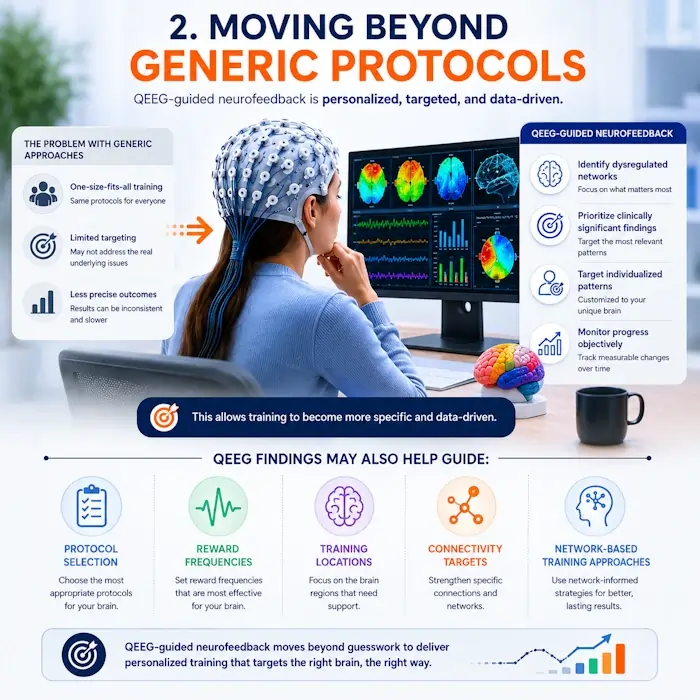
2. Moving Beyond Generic Protocols
Some neurofeedback systems use standardized training approaches for nearly everyone.
QEEG-guided neurofeedback instead attempts to:
- identify the most relevant dysregulated networks
- prioritize clinically significant findings
- target individualized patterns
- monitor progress objectively over time
This may allow training to become more specific and data-driven.
At advanced clinics, QEEG findings may also help guide:
- protocol selection
- reward frequencies
- training locations
- connectivity targets
- network-based training approaches
3. Monitoring Functional Connectivity
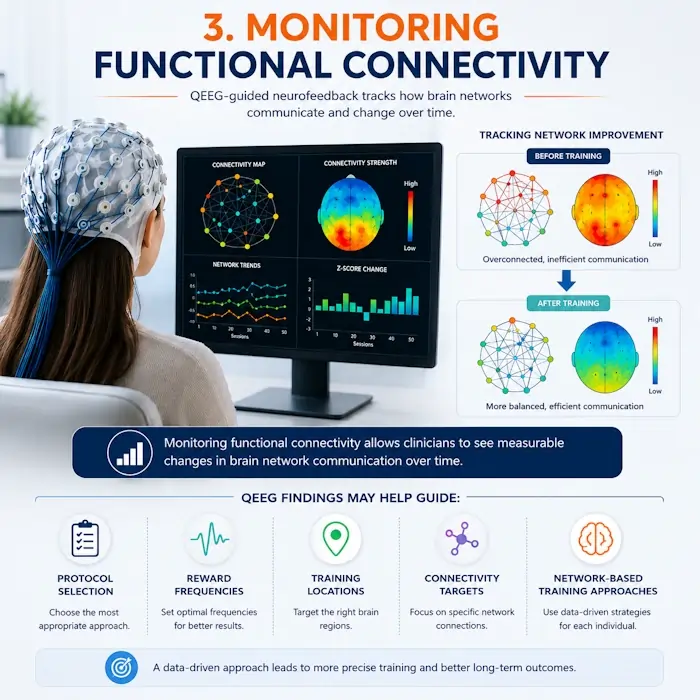
Modern QEEG analysis is not limited to isolated brain regions.
Connectivity analysis examines how efficiently different regions of the brain communicate with one another.
In some individuals, networks may become:
- excessively connected
- poorly synchronized
- inefficiently timed
- dysregulated during cognitive tasks
Connectivity dysregulation may influence:
- attention regulation
- emotional processing
- executive functioning
- cognitive flexibility
- stress responsiveness
This is one reason why many advanced neurofeedback approaches include coherence and phase-based analysis rather than focusing only on single brainwave amplitudes.
4. Using Normative Databases
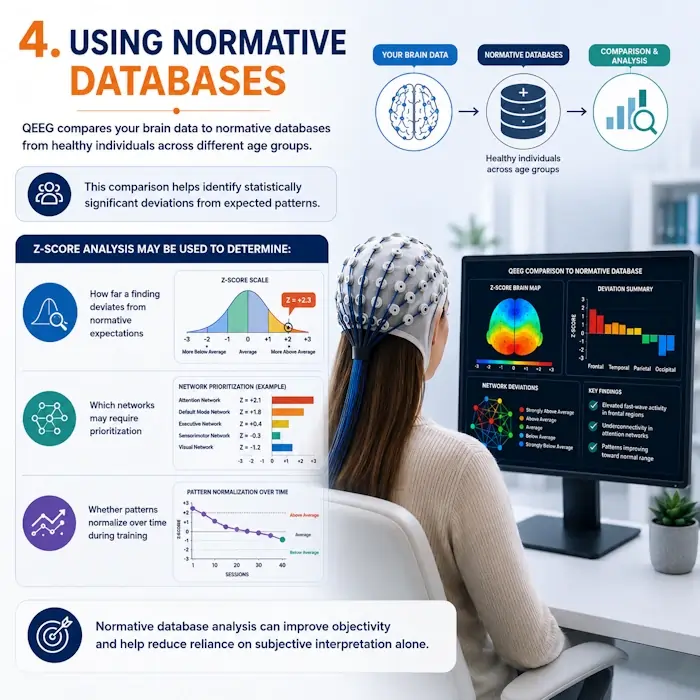
Many QEEG systems compare EEG data against normative databases derived from healthy individuals across different age groups.
This comparison helps identify statistically significant deviations from expected patterns.
Z-score analysis may be used to determine:
- how far a finding deviates from normative expectations
- which networks may require prioritization
- whether patterns normalize over time during training
Normative database analysis can improve objectivity and help reduce reliance on subjective interpretation alone. Many advanced QEEG systems use normative database methodologies developed through organizations such as Applied Neuroscience.
What Happens During a QEEG Assessment?
A typical QEEG assessment may include:
Clinical Interview
EEG Recording
Brain activity is recorded using sensors placed on the scalp while:
- eyes are open
- eyes are closed
- resting-state activity is measured
Data Processing
The EEG data is cleaned and analyzed using specialized software.
Quantitative Analysis
The data is compared against normative databases and evaluated across multiple metrics.
Protocol Development
The neurofeedback protocol is designed based on the findings, symptoms, and functional goals.
Is QEEG Brain Mapping a Diagnosis?
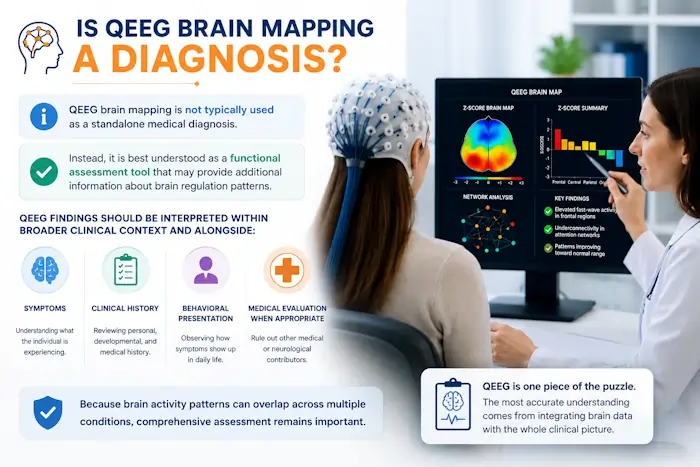
QEEG brain mapping is not typically used as a standalone medical diagnosis.
Instead, it is best understood as a functional assessment tool that may provide additional information about brain regulation patterns.
QEEG findings should be interpreted within broader clinical context and alongside:
- symptoms
- clinical history
- behavioral presentation
- medical evaluation when appropriate
Because brain activity patterns can overlap across multiple conditions, comprehensive assessment remains important.
Potential Benefits of QEEG-Guided Neurofeedback
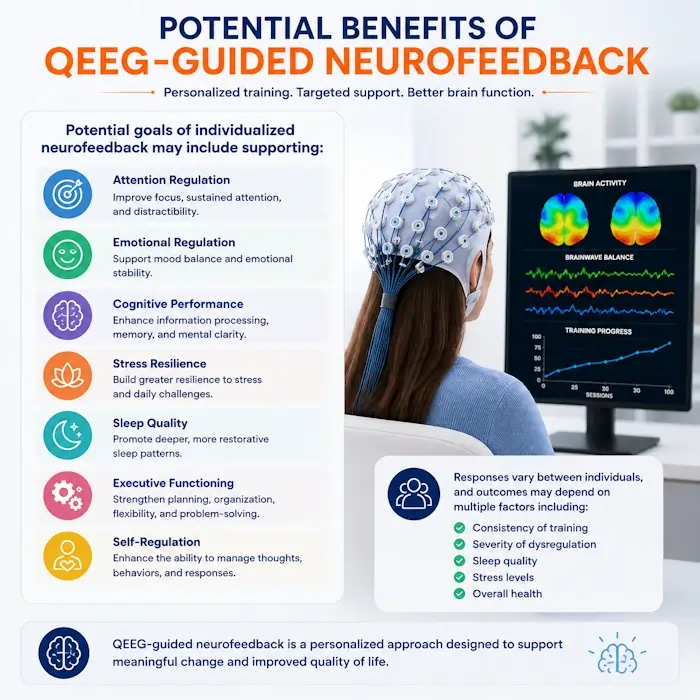
Potential goals of individualized neurofeedback may include supporting:
- attention regulation
- emotional regulation
- cognitive performance
- stress resilience
- sleep quality
- executive functioning
- self-regulation
However, responses vary between individuals, and outcomes may depend on multiple factors including consistency of training, severity of dysregulation, sleep quality, stress levels, and overall health.
Why Personalization Matters
The brain is highly individualized. Two people with similar symptoms may have very different underlying neural regulation patterns.
QEEG-guided neurofeedback attempts to move beyond generalized approaches by using objective brain data to help personalize training protocols.
This data-driven approach may improve precision, help prioritize clinically relevant findings, and provide a more structured framework for monitoring progress over time.
For clinics specializing in advanced neurofeedback and QEEG analysis, personalization is one of the central advantages of combining brain mapping with neurofeedback training.
At Chiang Mai Neurofeedback Center, QEEG-guided neurofeedback protocols are individualized using objective EEG analysis and functional connectivity assessment methodologies.
Additional information about neurofeedback and neuroregulation research can be found through the International Society for Neuroregulation & Research (ISNR).
This article is for informational and educational purposes only and does not constitute medical diagnosis or treatment advice.